What is ISO 14001 Certification?
ISO 14001 is a globally recognized standard for environmental management systems (EMS), providing a framework to help organizations minimize environmental impact while enhancing operational efficiency. The standard is applicable to businesses of all sizes and industries, guiding them to implement sustainable practices, comply with regulations, and improve stakeholder trust.
Organizations can integrate ISO 14001 with other management systems, such as ISO 9001 for quality and ISO 45001 for workplace safety, to create a holistic approach to responsible and efficient operations. By implementing ISO 14001 Certification in India, companies demonstrate their commitment to sustainability and prepare to meet increasing environmental scrutiny from regulators and customers.
ISO 14001 Enters a New Phase with the 2026 Revision
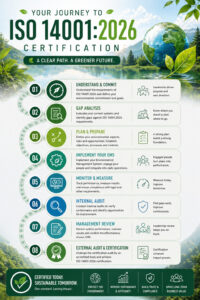
The introduction of ISO 14001:2026 marks a significant shift in how organizations approach environmental management. This new revision places greater emphasis on measurable performance, proactive risk management, and continuous improvement across all operations.
Unlike earlier versions, the updated standard encourages businesses to move beyond traditional compliance and adopt a more strategic, data-driven approach to managing environmental impacts. Organizations are now expected to strengthen monitoring systems, improve decision-making processes, and integrate sustainability into their core business strategies.
With this evolution, companies must review and upgrade their existing Environmental Management Systems (EMS) to align with the latest requirements. Early adoption of ISO 14001:2026 not only ensures compliance but also helps organizations improve efficiency, reduce environmental risks, and strengthen their competitive position in global markets.
Why ISO 14001 Certification is Essential for Businesses?
Achieving ISO 14001 Certification in India helps organizations adopt structured environmental practices. Certified businesses can:
- Improve energy efficiency and reduce waste
- Comply with environmental laws and regulations
- Strengthen brand reputation and customer confidence
- Attract environmentally conscious business partners
- Establish a culture of continual improvement
By implementing ISO 14001 standards and aligning with the expectations of ISO 14001:2026, companies create a reliable EMS that reduces environmental risks while fostering operational resilience.
How ISO 14001 Strengthens Your Environmental Management System?
ISO 14001 Certification equips businesses with tools to identify environmental impacts, set measurable objectives, and implement effective controls. Certified organizations benefit from:
- Streamlined processes to prevent environmental incidents
- Clear documentation of environmental policies and procedures
- Regular monitoring and performance evaluation
- Enhanced internal accountability and employee engagement
These measures ensure that environmental risks are managed proactively, helping organizations meet international best practices and prepare for transitions such as ISO 14001:2026.
ISO 14001 Certification Schemes Offered by IAS
IAS provides comprehensive ISO 14001 Certification in India, helping organizations adopt internationally recognized environmental management standards. Key certification schemes include:
These schemes allow businesses to adopt a structured approach to environmental management, ensuring compliance, efficiency, and sustainability.
Why ISO 14001 Certification is a Smart Business Decision?
Businesses adopting ISO 14001 standards demonstrate responsibility, innovation, and global competitiveness. Certification helps organizations meet regulatory requirements, improve stakeholder trust, and stay competitive in international markets.
Who Needs ISO 14001 Certification?
ISO 14001 Certification is applicable to organizations of all sizes, industries, and sectors. Businesses that can benefit include:
Implementing ISO 14001 helps these organizations streamline environmental processes, reduce waste, and gain competitive advantages in both domestic and international markets.
Benefits of ISO 14001 Certification
Organizations that achieve ISO 14001 Certification in India experience tangible benefits:
- Reduced environmental impact through improved resource utilization
- Cost savings by minimizing waste and energy consumption
- Enhanced market reputation and credibility with stakeholders
- Regulatory compliance with local and international laws
- Improved operational efficiency with standardized practices
- Opportunities for global trade and partnerships
These benefits not only improve sustainability but also strengthen overall business performance.
Operational Benefits of ISO 14001 Certification
ISO 14001 Certification in India supports business efficiency by integrating environmental considerations into daily operations. Businesses can:
- Reduce downtime and environmental incidents
- Standardize procedures across departments
- Enhance employee awareness of environmental responsibilities
- Align business strategies with sustainable practices
This creates a resilient and efficient system that supports long-term growth while maintaining environmental integrity.
Innovative Approaches with Remote ISO 14001 Audits
IAS employs advanced techniques for remote ISO 14001 audits, reducing the need for on-site verification while ensuring compliance. Remote audits involve:
- Verification of EMS documentation using digital platforms
- Online interviews and process evaluations
- Real-time monitoring of environmental indicators
This approach is efficient, cost-effective, and ensures accessibility for organizations across India.
Why Choose IAS?
IAS provides complete support throughout the certification process, including guidance, audits, training, and continuous improvement strategies.
With a strong presence across India, IAS ensures organizations achieve ISO 14001 Certification efficiently while aligning with international standards and evolving requirements.
Kindly contact us to have a free discussion about ISO 14001 certification in India for your organization! Request a quote now: enquiry@iascertification.com or visit our ISO 14001 certification frequently asked questions page!
The Certification Process
Initial Consultation
Begin by discussing your organization’s environmental management system (EMS) requirements, objectives, and the scope of ISO 14001 certification.
Documentation Review
IAS reviews your existing policies, procedures, and records to ensure they align with ISO 14001 standards and updated expectations.
Audit Preparation
Conduct internal audits and a gap analysis to identify areas needing improvement before the certification audit.
Remote or On-Site Audit
Auditors verify the effectiveness of your EMS either remotely or at your facility to assess compliance.
Certification Decision
Upon successful audit completion, the ISO 14001 certificate is issued.
Post-Certification Support
Continuous support is provided to maintain compliance and improve EMS performance.
ISO 14001 Certification — Frequently Asked Questions
What is ISO 14001 Certification in India?
Who needs ISO 14001 Certification?
Can ISO 14001 Certification be integrated with other standards?
How long does it take to get ISO 14001 Certification in India?
Is ISO 14001 Certification mandatory?
How does ISO 14001:2026 impact certification?
What are the costs involved in ISO 14001 Certification in India?
Locations We Serve
IAS serves businesses across India — choose your location for local ISO certification support: