What Is FSSC 22000 Lead Auditor Training?
A Lead Auditor trained through one IAS site should be indistinguishable, in competence, from one trained through another — that consistency is the point of running this five-day, CQI-IRCA Certified course, delivered by EAS as IAS's technical partner, to a single global syllabus rather than a locally-diluted one. Delegates anywhere in IAS's network learn to plan and lead third-party certification audits against FSSC 22000 Version 7, from Stage 1 through recertification.
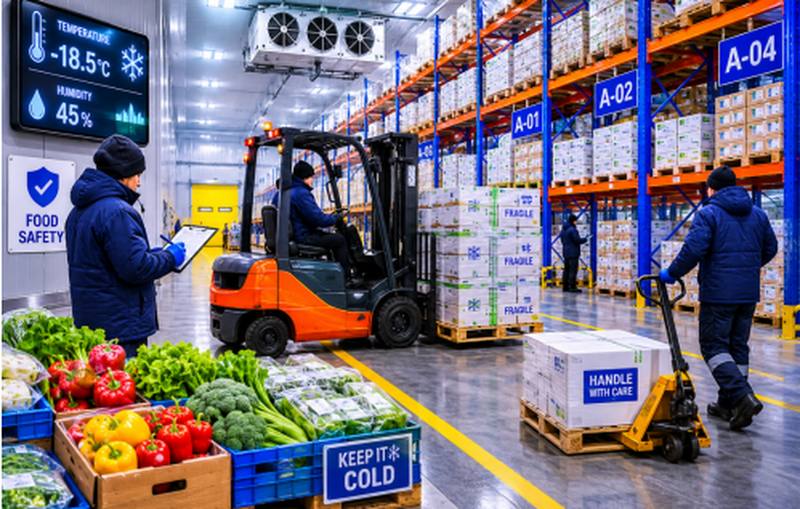
The role this course trains for sits outside the organisation being audited, not inside it. An internal auditor works within their own employer's Food Safety Management System (FSMS); a Lead Auditor is sent in by a certification body to assess someone else's FSMS, builds the evidence trail a certificate depends on, and, when the job needs more than one auditor, takes charge of the team.
Every version of this course, wherever in IAS's network it's delivered, is built against FSSC 22000 Version 7, which FSSC published in May 2026. The content doesn't change by location: planning an audit across a full certification cycle, sizing a sampling approach that holds up to scrutiny, coordinating a team, and writing findings a certification decision can rest on.
EAS delivers this course everywhere in IAS's network as IAS's technical partner for FSSC 22000 training, with CQI-IRCA Certified Training Course status attached consistently regardless of location. CQI-IRCA — the Chartered Quality Institute and International Register of Certificated Auditors — sets the competency criteria the course is measured against and maintains the auditor register graduates become eligible to apply to, at the grade their experience supports.
Why Do Lead Auditors Matter for FSSC 22000 Certification?
What an FSSC 22000 certificate is actually worth comes down to the Lead Auditor's judgement on the day: did the sampling plan reach far enough across the FSMS, did the evidence point toward conformity or a nonconformity, was the organisation genuinely ready or simply well-organised on paper.
Accreditation bodies hold certification bodies accountable for auditor competence in every market they operate in, and that standard doesn't flex by geography — a Lead Auditor's planning, sampling, and reporting are expected to clear the same bar whether the audit happens in one country or another. This course is built to that single global bar rather than being softened for any particular site.
What Changed Between FSSC 22000 V6 and V7?
FSSC 22000 Version 7 replaced Version 6 worldwide on 1 May 2026, with a 12-month transition period for organisations and certification bodies everywhere to complete the switch. A Lead Auditor feels that shift more than an internal auditor does, because audit programmes, sampling plans, and certification-body procedures all need to reflect V7 before any certification or recertification decision built on it will hold up, in any market IAS operates in.
| Area | Version 6 | Version 7 |
|---|---|---|
| Prerequisite programmes (PRPs) | Referenced the older PRP document series | References the new ISO 22002-x:2025 series worldwide |
| GFSI benchmarking | Benchmarked to the prior GFSI version | Benchmarked to GFSI's 2024 requirements across every market |
| Food-chain categories | Used broader category groupings | Uses a more clearly defined category/subcategory structure globally |
| Additional Requirements | Set a common baseline on suppliers, allergens, defence and fraud | Clarifies and expands supplier approval & monitoring, allergen management, food defence and food fraud mitigation everywhere |
| Culture requirements | Expected food-safety culture in general terms | Raises the bar on senior-management involvement, communication and monitoring network-wide |
| Sustainability | Not formally addressed | Adds requirements aligned to the UN Sustainable Development Goals (SDGs), applied consistently across markets |
| Milestone | Date |
|---|---|
| Version 7 published | 1 May 2026 |
| Transition period for organisations and certification bodies to move to V7 | 12 months, through approximately early May 2027 |
| Recommended Lead Auditor action | Bring audit-planning templates, sampling plans, and lead-in checklists onto V7 well before the deadline — organisations across IAS's network are, if anything, booking V7 audits earlier in the window rather than later. |
Source: FSSC 22000 Version 7 update — FSSC's own notice on the changeover. Certification bodies should still check their own accreditation body's timeline for auditor witnessing and sign-off, since it can run on a different schedule to FSSC's transition window.
How Does an FSSC 22000 Certification Audit Actually Work?
Wherever it happens, a certification audit runs across a structured set of stages rather than a single visit, and the course covers each one:
Which Nonconformities Should Lead Auditors Check For Under V7?
The move from V6 to V7 changes where a Lead Auditor needs to sample, not merely which clauses to cite — and that holds true no matter which market the audit is in. Given what V7 tightened, Lead Auditors across IAS's network should watch closely for:
- PRP evidence that's been genuinely rebuilt against ISO 22002-x:2025 — not the old documents with a new cover page.
- Allergen-management records that go deeper than they did under V6, since that's exactly where the new bar sits.
- A food fraud vulnerability assessment that was actually reworked for V7, not inherited unchanged from the last cycle.
- Senior-management involvement in food safety culture that an auditor can point to evidence for, not just take on trust.
- Sustainability paperwork — food loss, waste, packaging — that organisations slow to adopt V7 often still haven't produced.
These five areas are exactly what the course's audit simulations target, so delegates finish able to sample for V7-specific evidence with confidence, regardless of which market they go on to audit in.
How Does This Compare to Related Food-Safety Auditor Courses?
Lead Auditor training is regularly confused with Internal Auditor training or general food-safety auditor courses, across every market IAS serves. Set side by side, the scope, audience, and outcome differ substantially:
| Course | Who Audits | Typical Duration | What It Qualifies You For |
|---|---|---|---|
| FSSC 22000 Lead Auditor | External, third-party — on behalf of a certification body | 5 days | Leading certification audits anywhere in the network |
| FSSC 22000 Internal Auditor | Internal, first-party — inside your own organisation | 2 days | Handling internal FSMS audits within your own organisation |
| HACCP Lead Auditor | External, third-party — an organisation's HACCP plan specifically | 3–4 days (typical) | Auditing HACCP controls specifically, a scope narrower than the full FSMS |
Who Is This Course For?
- Certification-body auditors anywhere in IAS's network — staff or contractor — who need FSSC 22000 Lead Auditor competence on record.
- Internal Auditors ready to cross into third-party work, since that jump needs audit-management and recommendation-writing skills internal-audit training doesn't build.
- Consultants and technical specialists chasing contract auditor work with certification bodies in any market IAS serves.
- Lead Auditors already qualified on other schemes extending that competence to FSSC 22000 Version 7.
- Quality professionals anywhere in the network looking to move from an in-house QA role into third-party certification auditing.
What Does the Course Cover?
No matter where it's delivered, the course centres on simulated Stage 1 and Stage 2 audits, sampling-plan exercises, audit-team role-plays, and report-writing practice, because reading the scheme document alone doesn't build audit competence — running audits does.
| Topic | What You Learn |
|---|---|
| Scheme structure and the V7 changes, globally | How FSSC 22000 V7 is organised and what changed from V6, applied consistently across markets |
| Audit and sampling-plan design | Building an audit plan and sampling approach that hold up wherever the audit takes place |
| Running a team on bigger jobs | Briefing the team, splitting the scope between auditors, and merging their notes into one report |
| Evidence at full third-party scope | Interview technique and objective-evidence gathering across a complete audit, wherever it's run |
| Calling nonconformities correctly | Grading severity and reaching a certification recommendation that holds up anywhere in the network |
| Writing reports that carry weight | Report writing built around what a certification body's decision actually needs to see |
Course Structure and Duration
Five days is the standard length for third-party auditor training at Lead Auditor level, and IAS runs the course as either a classroom programme or live online at every site in its network, so delegates can pick whichever format suits them. Confirmed dates are listed on the IAS training schedule.
| Day | Focus |
|---|---|
| Day 1 | FSSC 22000 V7's structure and scope, and certification-body context that applies network-wide |
| Day 2 | Sampling-plan sizing, audit-plan drafting, and Stage 1 exercises |
| Day 3 | A complete Stage 2 simulation, run at full interviewing and evidence-gathering scale |
| Day 4 | Grading nonconformities, directing a team, and merging findings into a single report |
| Day 5 | Report drafting, the recommendation, and a final assessed simulation, run consistently across sites |
How Do You Build an Effective Certification Audit Programme?
A single certification audit only opens the relationship — most Lead Auditors go on to manage, or contribute to, a full three-year certification cycle: an initial certification audit, annual surveillance audits, then a recertification audit before the cycle restarts. The course covers how sampling and audit focus need to shift across that cycle, wherever it's run:
By the end, delegates can plan a defensible programme across a whole certification cycle, not just a single audit — a skill that travels across markets.
What Are the Prerequisites?
There's no formal entry exam anywhere in the network, but the course assumes delegates already have a working grasp of FSSC 22000 — usually built through FSSC 22000 Internal Auditor experience, a food-safety or quality-management background, or third-party auditing experience gained on another scheme. IAS's FSSC 22000 Internal Auditor Training works well as a first step for anyone joining FSSC 22000 auditing from outside the scheme.
What You Receive
Completion earns a CQI-IRCA Certified FSSC 22000 Lead Auditor certificate, issued under EAS regardless of which IAS site delivered the course, confirming Version 7 competence across audit planning, evidence-gathering, and reporting — and it supports an application to CQI-IRCA for auditor registration at the grade your experience justifies.
Why Train With IAS?
| Delivery, network-wide | EAS delivers this course everywhere in IAS's network as its technical partner and issues the completion certificate directly; it carries CQI-IRCA Certified Training Course status consistently across every site |
|---|---|
| Trainer background | Trainers bring genuine FSSC 22000 certification-audit experience, not classroom-only credentials, wherever the course runs |
| How the audits are practised | Stage 1 and Stage 2 simulations, audit-team role-plays, and report writing are run live at every site, not just described |
| How you can attend | Classroom or live online across IAS's network, assessed against the same audit simulation either way |
| Where it leads from | A defined next step for existing IAS Internal Auditor graduates anywhere in the network moving into third-party work |
About the Trainer
Dr. C.D. Mohana Priya — molecular geneticist, ISO 22000:2018 Lead Auditor & FSMS Tutor.
Associate Professor (Research), Department of Human Genetics, Sri Ramachandra Institute of Higher Education and Research, Chennai. She holds current EAS credentials as an ISO 22000:2018 Lead Auditor & FSMS Tutor (2025), alongside ISO 9001:2015 Lead Auditor (2024) and ISO 15189:2022 Internal Auditor (2023) certifications. With 15+ years of laboratory quality, diagnostics, and management-system training experience — including direct implementation of ISO 22000:2018 food safety management systems — she has delivered classroom and live virtual training to postgraduate, PhD, and industry delegates across food-safety and laboratory-quality systems.
Get Started
Contact IAS directly for confirmed dates, group pricing, and guidance on whether classroom or live-online delivery fits your team best at your nearest IAS site.
Phone: +91-9962590571 · Email: enquiry@iascertification.com
FSSC 22000 Lead Auditor Training — Frequently Asked Questions
Does this course carry CQI-IRCA Certified Training status everywhere IAS delivers it?
How is a Lead Auditor's role different from an Internal Auditor's?
Should delegates complete Internal Auditor training first?
Is the course length the same at every IAS site?
What should a Lead Auditor take away about the Version 7 changes?
Can this be booked in-house for a certification body's team at any IAS site?
Where This Course Is Delivered
IAS delivers this Lead Auditor course across India and online.